
For homeowners and DIY enthusiasts tackling concrete projects like patios, driveways, or small floors, achieving a professional finish is often the biggest challenge. A power trowel, sometimes called a “power float,” can make the difference between a rough slab and a smooth, durable surface. But when it comes to using one, many DIYers face a common dilemma: should you rent a power trowel for a single job or invest in buying one for repeated use?
What Is a Power Trowel?
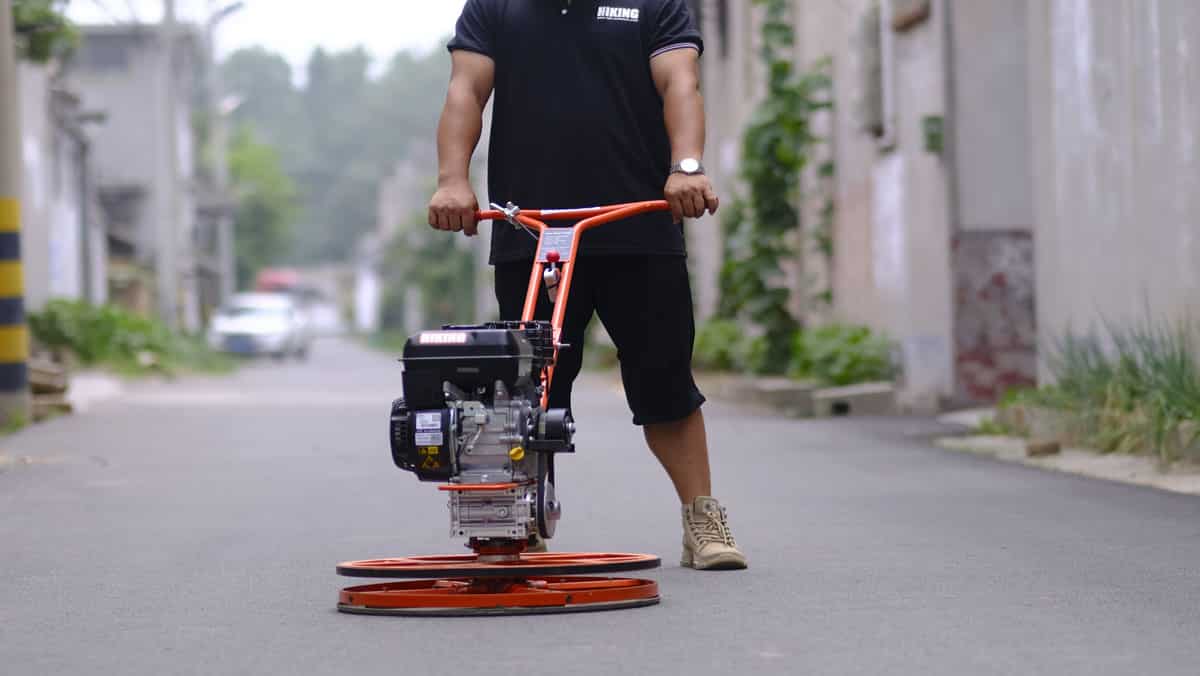
A power trowel is a finishing machine equipped with rotating blades designed to smooth and polish freshly poured concrete. Unlike hand trowels, which require significant time and labor, power trowels cover large surfaces quickly and deliver a more consistent, professional-grade finish. Power trowels are mainly divided into walk-behind power trowel for smaller jobs and ride-on power trowel for large commercial slabs.
Renting a Power Trowel: Costs and Considerations
Rental Price
- Walk-behind power trowels typically rent for $60–$120 per day or around $200–$400 per week.
- Ride-on models are far more expensive, usually ranging from $150–$300 per day, though they are rarely needed for DIY jobs.
Additional Costs
- Deposit: Most rental centers require a refundable deposit ranging from $100 to $300.
- Fuel/Power: Gas-powered trowels require fuel, adding around $10–$20 per day.
- Delivery/Pickup Fees: If the machine is too heavy for your vehicle, delivery charges may apply, often between $50–$100.
Advantages of Renting
- Lower upfront cost: Perfect for one-off projects.
- No maintenance burden: Repairs and upkeep are handled by the rental company.
- Flexibility: Rent different sizes depending on your project.
Drawbacks of Renting
- Recurring cost: Renting multiple times quickly adds up.
- Time pressure: Limited rental periods can create stress if your concrete curing takes longer than expected.
- Availability issues: During peak construction season, power trowels may be in short supply.
Buying a Power Trowel: Costs and Considerations
Purchase Price
- Entry-level walk-behind models: $800–$1,200
- Mid-range walk-behind models: $1,500–$3,000
- High-end or ride-on models: $5,000 and up (not practical for most DIY projects)
Ownership Costs
- Fuel and oil: Expect around $100–$150 per year for occasional DIY use.
- Maintenance and repairs: Blade replacement, belts, or minor servicing can cost $50–$200 annually.
- Storage: You’ll need dry, secure space to store the machine.
Advantages of Buying
- Long-term savings: If you have multiple concrete projects over time, ownership becomes cost-effective.
- Convenience: Work on your project without the stress of rental return deadlines.
- Resale value: With good upkeep, power trowels usually retain 40–60% of their original value when resold.
Drawbacks of Buying
- High initial investment: Not budget-friendly for occasional users.
- Maintenance responsibility: You’ll need to handle servicing and repairs.
- Space requirement: Storing large equipment may be inconvenient.
Cost Comparison Example
Let’s compare renting versus buying with a simple scenario:
Scenario 1: One Patio Project (3 days of work)
Renting a walk-behind power trowel for three days at $90/day = $270 (plus fuel). Purchasing a new machine for $1,200 would be over four times the cost of a single project. Renting is clearly more economical here.
Scenario 2: Multiple Projects Over Two Years (5 projects, each 3 days)
Renting each time: $270 × 5 = $1,350. Buying a $1,200 model makes more sense since the purchase cost is lower than cumulative rental fees, and you still own the machine for future use.
Scenario 3: Occasional Small Jobs
If you only need the machine once every few years, renting keeps costs down and eliminates storage and upkeep headaches.
Which Option Is Better for DIY Homeowners?
Rent if:
You’re planning just a few small-scale projects.
You’d rather skip the burden of upkeep and storage.
When funds are tight and your project fits the rental timeframe.
Buy if:
You have multiple upcoming projects (patios, driveways, sheds, or home extensions).
You value convenience and flexibility.
You see resale potential to recoup part of the investment.
Deciding whether to rent or buy a power trowel machine depends mainly on how often and how large your projects are. Renting is ideal for homeowners with a single project, offering affordability and convenience. Buying, however, pays off in the long run if you anticipate multiple concrete projects, providing both savings and flexibility.
For most DIYers, renting a walk-behind power trowel is the practical choice, while buying makes sense only for those committed to ongoing concrete work.