
If you have trees that are for a long time, you begin to notice tiny changes. A branch that is empty. The bark appears loose. Lean that maybe did not exist in the last month. Sometimes, it’s nothing major. Sometimes, it’s the beginning of a problem. This is why knowing what Signs a Tree Is Dead is so important. Trees usually provide clues when it fails however, the clues can be easy to overlook if you do not know what you’re seeing.
I run Arbor Wise Tree Service, and this is among the most frequent calls we receive. It is not common for people to call and declare, “I know exactly what is wrong.” They usually say something more sincere. They tell”the trees “looks out of place.” They may also mention bark falling off, an abrupt unsteady, or brittle, branches hanging on the drive. It’s true that this intuition is usually right. Trees are susceptible to decline and then be more risky than most people anticipate.
The trick is the fact that no rough tree is dead and not all living trees are secure. It is possible for a tree to have some life and be a danger due to decay, root issues cracks, weak structures. Arbor Day Foundation and other sources for tree risk clarify that problems are most critical when they can hit a target such as the car, home or walkway. place.
Let’s take it slow and take a walk around it. Here are the top signs of a Tree is Dead, the distinction between a dormant and dead tree, as well as the warning signs that a tree is likely to collapse. If you can identify the signs to look out for, the entire picture will become clearer.
Key Takeaways
- The most prominent signs a Tree Is Dead include large dead wood, dry branches without green tissue underneath the bark, extensive decay, loss of bark, and structural problems that are major.
- A tree could be in good health, but is it safe when it is afflicted with trunk cracks and roots damaged, sudden leaning or fungal decay.
- The dead or dying tree typically display thinning canopy branches, dead trees and bark issues and trunk wounds. conks and mushrooms on the tree’s trunk or around the roots flare.
- A dormant or dead tree might appear the same initially, and so basic tests such as testing for scratch and the flexibility of trees could assist, but they should not replace an arborist’s examination.
- When a tree grows in close proximity to people or structures, driveways as well as power lines don’t delay in examining. It’s not solely related to the trees. It’s about what it can do.
Are there any obvious indicators that a Tree Has Died?
The most obvious signs that a tree is Dead is usually evident in the wood and canopy. If a tree is found to have large sections that are not covered in leaves during the growth season, and has numerous branches that are brittle, and no green tissues under the bark, it is a warning sign. Dead wood is among the most significant indicators of danger since dead branches as well as dead tops could break in unpredictable ways.
Here are a few most commonly observed indicators of a dead tree or a tree that is in extreme decline:
- Large sections of bare canopy in the spring and summer
- Dead tree branches snap easily, instead of bent
- There is no green layer underneath one small scratch on the bark
- Bark loss affecting large areas of the trunk
- Conks, mushrooms or visible decay in the trunk or around the base
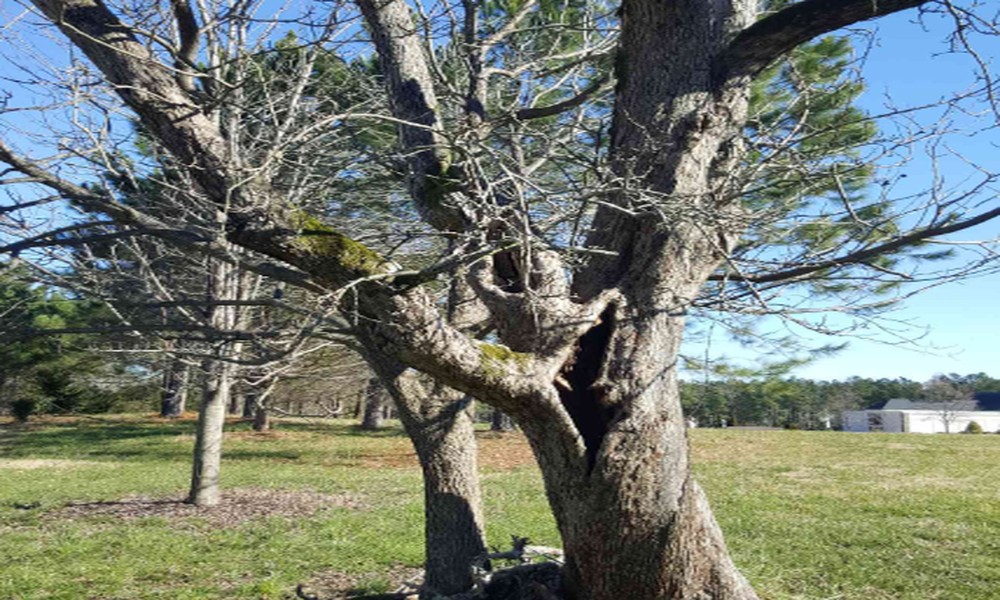
- Cracks that are large, cavities or cracked tops
- Unexpected leaning of the root or cracking in the soil close by
One thing I always tell homeowners on a regular basis is that a dead limb doesn’t necessarily mean that the entire trees are gone. Trees may lose branches for a variety of reasons. However, when dieback is a lot, when the canopy above is dead or if the tree itself is damaged this is when the signs that a tree is Dead become more difficult to understand.
How do you know whether the plant is dying or dormant?
This is the one I am most frequently asked during the winter months and in the early spring. When people look at a naked tree and get scared. Sometimes they’re correct. Sometimes, the tree is inactive and has been unable to awake.
Dormant or dead trees might appear identical on first inspection, especially in the case of not knowing the species. Some trees mature later than others. This is why the timeframe is important. If trees that are of the same kind are in active use, but one remains unoccupied, it is more suspect.
A couple of tests can be beneficial:
- Scratch test: gently scratch a tiny twig or bark surface. The green, moist and spongy tissue below indicates the existence of. Dry and brown tissue suggests that the section might be dead.
- Snap test: Tiny dormant twigs tend to bend slightly. Dead twigs snap more easily and feel fragile.
- Bud checks: Healthy buds tend to be firm and healthy. Buds that are dry or damaged could be a warning signal.
But, they aren’t without limitations. Trees can be alive tissue in one place and significant decline elsewhere. If you’re thinking what to do to determine if trees are dead take these quick tests for clues, but not as the final decision. I believe that’s the most secure approach. A living tree with a weak root system is an issue.
What tree dangers must homeowners not ignore?
Some tree hazards are more urgent than other signs particularly when the tree is close to an driveway, house or sidewalk, parked vehicles or in a location in which people are gathered. A single defect isn’t always a cause for concern. But a defect coupled with an objective can change everything.
The most prominent warning signs the tree could fall are:
- A lean that is new, particularly when there is heavy rain or wind.
- Cracked, raised or even heaving dirt around its base
- Exposed roots or evidence of movement of the root plate
- Cracks in the trunk that are major or seams
- Large dead limbs that hang over areas of habitation
- A damaged or split trunk or top
- Fungal growth or decay that is advanced at the base
The U.S. Forest Service and other resources for hazard trees frequently flag dead wood cracks in bark, brittle tops, conks, or root problems as structural issues. This doesn’t mean that every tree that has a defect will be a failure tomorrow. However, these signs need to be taken note of in the event of storms or work within the roots.
In the Arbor Wise Tree Service, I typically advise clients to be able to accept sudden changes. A tree that is leaning in the same direction for years may simply be moving towards the light. If a tree suddenly begins leaning, mainly due to cracks in the roots or obvious root lift is distinct. It is best to inspect it promptly.
Are dead branches of a tree a sign that the entire the tree has died?
But not always. It is here that nuance can be a factor.
A few dead branches may result from normal shade, minor damage to the tree from storms, pruning issues or even localized stress. However, if dead branches are increasing, particularly if the branches are falling on a single side or if that top part of the tree appears to be being weakened significantly, those are more obvious indicators that the trees is dying. University of Maryland notes that one-sided dying can indicate the root or trunk being damaged on the affected side, which can make the tree unstable and potentially dangerous.
Here’s a method to look at it:
- A few dead twigs are not ideal however not always serious
- Several larger dead limbs: worth inspecting
- Dead upper crown, or wide canopy thinning: more to consider
- Dead limbs with cracks and fungi, or bark loss or lean: more at risk and urgent
I have seen people focus upon the incorrect branch, and fail to see the root of the problem. They focus on the branches hanging over their heads which is understandable but the reason that branch has died could be in the roots or within the trunk. Therefore dead branches are important. But they’re usually an integral part of the larger story.
Do fungus growth on tree trunks always mean that the trees are dying?
Sometimes but it’s one of the most important clues.
The presence of fungus on the tree’s trunks or conks near the base usually indicates the presence of internal decay or root rot and heart rot. UC IPM and University of Maryland both mention that wood decay fungal fungi can impact the roots and trunk and roots, often with no warning to the public until decay has progressing. Fungal growths near the ground could indicate root rot or trunk decay, and root rots are often responsible for dieback as they block water and nutrient movement.
The reason for this is that the that the lawn’s mushrooms aren’t identical to conks that are connected directly to the tree. The nearby mushroom may or may not be related to the condition of the tree. However, the growths that appear on the branches, buttress roots or even the root flare are more alarming. They could be real decaying tree signs, particularly when you notice dieback of the canopy, soft wood hollows, bark issues.
Common decay clues include:
- Conks shaped like shelves that hang from the trunk
- Mushrooms at the foot of the tree
- Soft hollow, crumbly, or hollow wood
- Old wounds or a few cavities that continue to grow
- The canopy is dying, coupled by decay in the bottom
If you’re seeking signs that of a Tree is dying fungal fruiting bodies should be on the list. It’s not because fungus is always a sign of complete failure, but rather because it usually means that the wood is more brittle that it seems.
Are warning signs or the falling of tree bark dangerous?
Sometimes, yes, and sometimes no this is an answer that can be a bit frustrating.
Certain species naturally shed their bark in a patch. minor bark problems could result from sunscald, weather stress, or even old pruning injuries. Iowa State points out that the splitting and shedding of bark may occur for a variety of reasons, such as lightning or physical damage. Damaged trees need to be assessed. However, if you observe large cracks, long seams or significant loss of bark with dieback, the level of concern increases rapidly.
The most dangerous tree crack warning signs on the trunk comprise:
- Deep vertical cracks expose the wood’s inner layers
- Horizontal cracks that be a sign that wood fibers are undergoing stress.
- Seams that are open and continue to expand
- Cracks and cavities that occur in conjunction with decay or stems with codominant roots
- The splits occur after storms or severe branch failure
If tree bark is disappearing, it is the design is crucial. small peeling patches on a tree species with exfoliating bark are a sign. large areas of missing bark or loose bark on dead wood or even bark falling off over a large area of the trunk are alarming and could indicate decay, disease or even severe stress.
If you’re trying to identify Signs a Tree Is Dead the bark will tell you lots. The healthy bark does not need to be perfect However, extensive loss of bark and cracks that are deep aren’t factors I’d choose to overlook.
When do danger signals begin to get urgent?
A tree that leans slowly for a long time isn’t always in a state of crisis. A tree with a sudden lean is distinct. Penn State Extension says leaning trees must be examined to identify risk and take corrective actions, and the sudden leaning of roots exposed or soil that is cracked is among the most effective warning signs of danger.
The most urgent tree leaning danger warnings include:
- The lean is brand new or perhaps noticeably less effective.
- The soil is separating, cracking or forming mounds at the base
- Roots may be exposed or damaged.
- The tree is leaning towards an entrance to a driveway, home or play area. street
- Leaning is often accompanied by degeneration, root rot or storm damage
This is a case when common sense is helpful. If a tree is unstable and there’s something valuable or at risk beneath it, putting it off for a while will make a difference. In the case of Arbor Wise Tree Service, I’d rather look at an unbalanced tree that is found to be a manageable tree than visit after the trunk has already been up on the roof.
When is the best time to remove dead trees, instead of putting it in a limb?
This is the area that homeowners are prone to delay, usually due to the fact that removal is a more significant decision. I am aware of that. Trees are important. People are drawn to them. I do too. However, there comes a time where removing dead trees is less about choice and more about security.
Removal is more likely when:
- Most of the canopy dead
- The trunk is cracked with major cracks and severe decay. It also has the loss of bark
- Large dead limbs hang over occupied spaces
- It is the root system that has failed, or the tree has suddenly started to lean.
- Fungal decay can be advanced at the trunk or base
- The tree is near enough to strike a target even if it does not.
A dead tree doesn’t improve its safety over the passage of time. In reality, the reverse happens. The wood becomes more dry and fragile, and removal could be more difficult later. This is particularly true when branches begin to drop or the trunk starts to split.
If you’re not sure whether the tree is in danger examine three aspects in conjunction: the condition of the tree and the probability of its falling, and the kind of tree it is likely to fall on. This is the way that the tree risk concept works within the actual world.
What should homeowners do should they be concerned about dying trees?
First, do not climb it. Don’t begin cutting huge branches by yourself. Also, do not work on a tree which is cracked, leaning or near power lines.
The best next step is:
- Photograph clearly the trunk, canopy and the base
- Check if the issue has occurred suddenly or was slowly developing
- Look for potential targets such as fences, roofs or walkways
- Beware of parking in the area or gathering under limbs you don’t trust.
- Request a professional arborist’s inspection when several warning signs are visible
Here at Arbor Wise Tree Service, we attempt to make that part simple. Sometimes, a tree requires pruning monitoring, cabling or soil maintenance. Sometimes, the most secure solution is to remove it. I wish there was an easier fix. It’s not always the case. However, the earlier you notice Signs a Tree Is Dead you’ll have more options than you’ll have.
FAQs
What can I do to tell when I’m noticing signs that a tree is dying or simply changing seasons?
Examine the timing the species, buds and the tissue beneath the bark. Dormant trees can have the green tissue and flexible twigs While a dead area tends to be dry, brown and brittle.
Are dead tree branches always dangerous?
It is not every dead branch is a significant danger, but more dangerous dead limbs may fail in unpredictable ways. Dead wood is among the major hazards arborists keep an eye on.
Does fungus on the tree trunk mean that it is time to remove?
It’s not always the case. However, fungus growing on the base or trunk could indicate decay within the structure or root issues, so it’s important to check it out particularly if it is accompanied by structural or dieback issues.
Is the tree’s bark falling off every time a sign that the tree is dying?
No. Some bark loss is natural, based upon the type of tree. However, heavy loss of bark particularly with decay, cracks, and dead trees, are more worrying.
What are the most important warning signs that a tree is about to be about to fall?
Leaning exposed or heaving root cracked soil, massive cracked tops of trees, cracks in the trunk the advanced stage of decay, and massive dead limbs that hang over objects are some of the most evident warning indicators.
A tree doesn’t have to be dead completely to be dangersome. This is the main aspect I’d give you. The most disastrous failings are caused by trees that are healthy but weak in their structure. If you’re noticing signs that a tree is dying or just indicators that your dead tree, take the concern enough to have it examined. It’s much easier to make the right decision in time rather than to make a quick one following the fall of a limb.
This post was written by a professional arborist at Tree Trimming Clearwater Florida. Robert Miller is the owner of Arbor Wise Professional Tree Care, a locally owned and operated tree service company that offers superb lawn care by the most experienced Arborists. Arborwise Tree Services is a tree removal company that offers stump removal, tree pruning, stump grinding, fertilization, and tree restoration. We have an extraordinary lawn care industry notoriety covering the Pinellas county area.