
A roof in Texas County never gets an easy season. Winter nights can drop into the single digits and freeze anything left damp. By late spring, thunderstorms come through with hail and wind gusts strong enough to peel shingles off a ridge. Summer cooks the attic, and fall buries the valleys under oak and hickory leaves. Each season wears on the roof in a different way, and the damage adds up quietly until a stain shows on a bedroom ceiling.
People who look up residential roofing in Cabool usually do it after something has already gone wrong, like a drip in the hallway or shingle tabs scattered across the yard after a storm. The local builder behind that link repairs leaks and storm damage on houses around South Central Missouri. But a roof’s yearly cycle is worth understanding well before that point, because most failures here aren’t a single event. They’re the last step of a pattern that ran for several seasons.
Spring Brings the Hammer
From April through June, the Ozarks sit in a busy part of the severe weather belt. Hail is the obvious threat. A storm of pea-sized hail usually just knocks some granules loose. Stones the size of quarters and larger can bruise asphalt shingles, crack the mat inside them, and dent metal vents and gutters. Those bruises often can’t be seen from the ground. They show up a year or two later as bare patches where the granules wore away faster than everywhere else.
Wind does a different kind of damage. Straight-line gusts get under shingle edges, especially on older roofs where the sealant strips have dried out, and fold the tabs back. A tab that bends without tearing off can still crease, and it never lies flat again. Water then gets pushed under it whenever the next storm blows in from the same side.
After a big storm, the order you do things in matters.
- Look from the ground first. Check for missing tabs, dents in gutters and downspout elbows, and piles of granules where downspouts drain.
- Check the attic with a flashlight on the next sunny day. Pinpoints of daylight or damp spots on the decking tell you more than anything visible outside.
- Take dated photos of everything before any repair or tarp goes on. Insurers usually want to see the damage as it was.
- Have a roofer go up instead of climbing yourself. A wet or hail-scarred roof is slippery, and storm damage is easy to misread.
- Be careful with crews who go door to door after a storm, especially ones from out of state who ask for a large deposit up front.
Summer Bakes It Slowly
Hot months do their damage in less obvious ways. On a 95 degree afternoon, the surface of a dark shingle roof can get much hotter than the air, and the attic below it can turn into an oven if the ventilation is weak. That trapped heat slowly breaks down the asphalt from underneath. Shingles get brittle, curl at the edges, and lose their flexibility years before the warranty would suggest.
Good attic ventilation counts for more here than most homeowners expect. Air needs a clear path in at the soffits and out at the ridge. Insulation pushed into the soffit bays, or old gable vents fighting a newer ridge vent, can block that flow. The result is a hot attic all summer and a damp one all winter.
Humidity adds its own trouble. Ozark summers are sticky, and roofs under heavy shade stay damp long after a storm passes. That’s where the dark streaks of algae and the green patches of moss show up, mostly on north-facing slopes. Algae is mostly cosmetic. Moss is not, because it holds water against the shingles and slowly lifts their edges.
Fall Fills the Valleys
Hardwood forests surround most homes in this part of Missouri, and they shed everything at once. Leaves land on the roof and slide straight into the places that can least afford a blockage.
Valleys are where two slopes meet and carry the most water on the roof. A thick mat of wet leaves there acts like a dam, so water backs up sideways under shingles that were only meant to shed it downhill.
Gutters packed with leaves overflow at the corners and dump water right next to the foundation. The fascia boards behind them stay wet long enough to rot, and that rot often goes unnoticed until a gutter pulls away from the house.
Chimney crickets and the upslope side of skylights catch debris the same way. The flashing in these spots is already one of the most common leak sources, and trapped leaves keep it wet for days after every rain.
Fall is also the right time for a close inspection before winter. The National Roofing Contractors Association has long advised homeowners to have their roof inspected at least twice a year, ideally in spring and fall, and again after any severe storm. Here that schedule lines up neatly with the two worst stretches of weather.
Winter Pries It Open
Ozark winters aren’t as long as those up north, but they cycle back and forth a lot. A dusting of snow melts during a sunny afternoon, the water runs into a seam or a cracked shingle, and then it freezes again overnight. Each freeze widens the gap a little. A small opening in October can be a real leak by March.
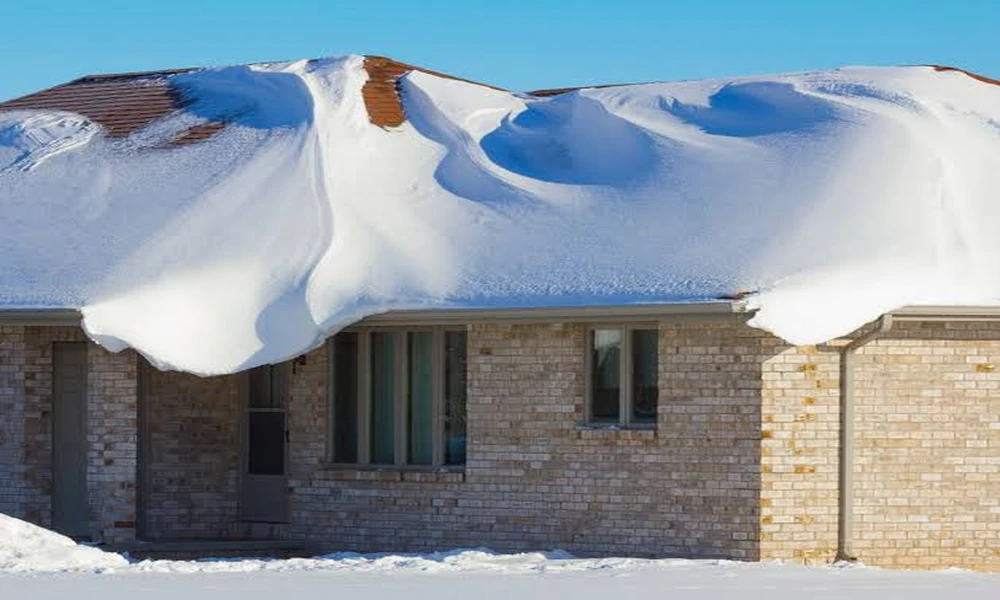
Ice dams are less common here than in Minnesota, but they do form during the occasional week of hard cold with snow on the roof. Heat escaping from a poorly insulated attic melts the snow from below, the water runs down to the cold eaves and refreezes, and the next round of melt backs up behind that ice ridge and under the shingles. An ice and water membrane along the eaves at installation is the cheapest protection. Fixing the attic insulation and air leaks deals with the cause.
Freezing rain brings its own risk. Ice storms load the trees, and limbs come down onto roofs. A broken branch can punch through the decking or just tear off a strip of shingles, and either way the roof needs attention before the next thaw.
When a Patch Stops Making Sense
Every roof reaches a point where fixing the latest problem means covering up a larger one. Several signs suggest a roof is close to that point. There are repairs on more than one slope in a couple of years. Curling or cupping is showing up across the whole roof, not just one corner. Bare granule patches keep spreading, and the decking feels soft underfoot near the eaves. The age of the roof matters too. Asphalt shingles in this climate rarely make it to the end of their advertised lifespan, because the mix of hail, heat and freeze cycles wears them down faster than a milder region would.
A full replacement is also the one chance to fix what’s under the shingles, like rotten decking, poor ventilation, flashing that was never installed properly, and missing ice barrier at the eaves. Spending a bit more on those parts often adds more years than choosing a premium shingle. A roof built to handle every season here, not just whichever one did the latest damage, is what keeps the next ceiling stain from showing up.